
Proposal · Planning · Jamaica
What actually happens on the day
of a surprise proposal in Jamaica.
There are two ways a surprise proposal in Jamaica gets photographed, and they require completely different approaches. The first is the hidden photographer: I am already in position before the couple arrives, completely out of sight, and the partner being proposed to has no idea a photographer is involved at all. The second is the in-session proposal: the couple books what appears to be a regular couples shoot, and at a moment and location agreed in advance, the proposal happens during it.
Both produce extraordinary photographs. Both require serious preparation. What that preparation looks like is very different.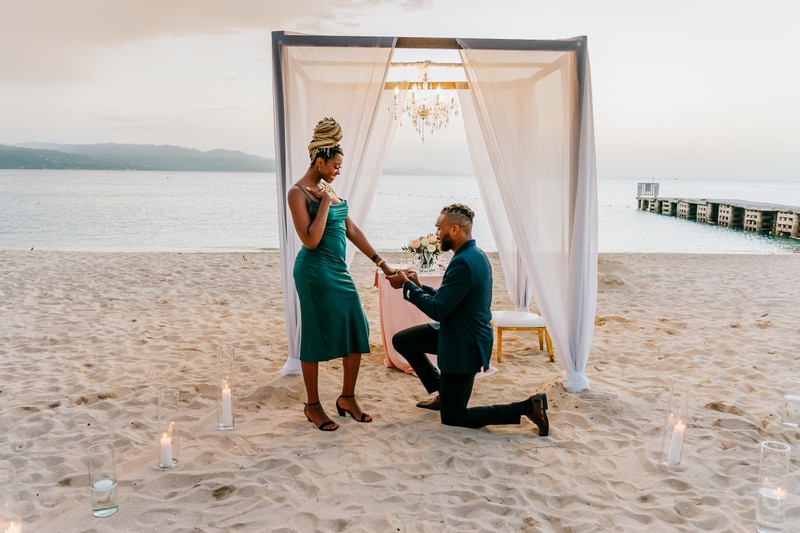
Approach one
The hidden photographer proposal.
In this version the partner being proposed to does not know a photographer exists. The session has not been sold as a photo shoot. I am positioned and invisible before the couple arrives, and everything that follows is completely undirected and entirely real.
The logistical challenge is concealment. Finding a position with a clear sight line to the moment, good light, and zero chance of being spotted before the question is asked. That is what the preparation is built around.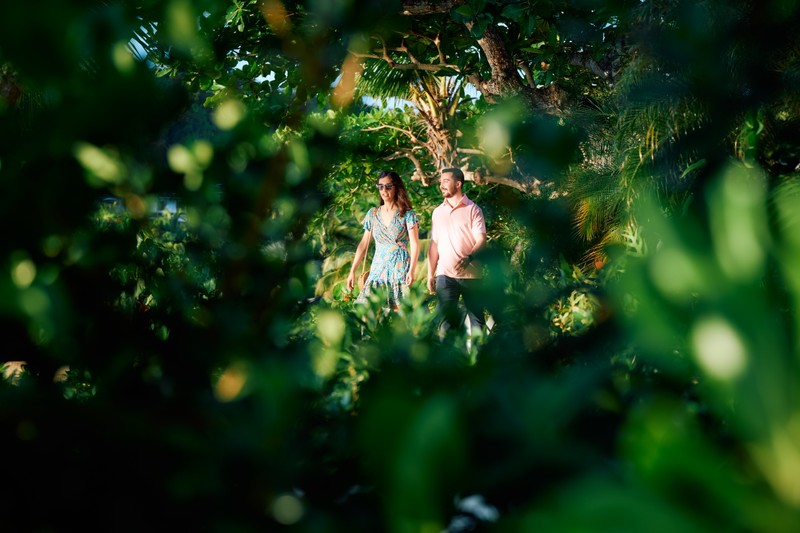
The morning
A message, usually around 8am.
By the morning of the proposal, the plan is already fully formed. We have spoken at least once, probably twice. I know the location, the timing, the cover story, and what your partner looks like. But I still send a message in the morning to confirm everything is still on track.
Sometimes plans shift slightly overnight. The cover story changed. The partner seemed suspicious. The resort arranged something unexpected. I want to know any of that before I leave for the location. Most mornings, the message back is simple. Still on. See you there.
The location
I arrive before you do. Always.
I arrive at the location significantly before the couple. Sometimes thirty minutes. Sometimes longer, depending on the complexity of the spot. At the Negril cliffs this might mean finding a position on the rocks below sight line, testing angles, understanding where the light will fall when you arrive. At a private villa it might mean working out which part of the garden gives me coverage without being visible from the main path.
I am looking for three things. Where to stand so I cannot be seen. Where the light is best at this specific time of day. And where the couple is likely to naturally position themselves when the moment happens. By the time you arrive, I am already in position. You will not see me.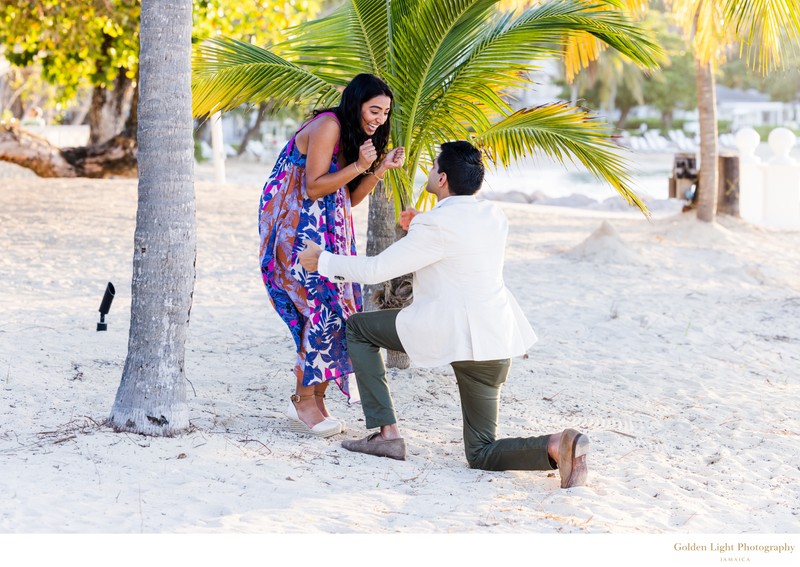
The wait
The strangest part of the job.
Waiting, hidden, knowing what is about to happen, is genuinely one of the stranger professional experiences I have. There is a particular quality of attention that comes with it. Everything sharpens. The light on the water. The sound of footsteps on a path. The moment a couple comes into view.
I am already shooting before the proposal happens. The approach. The walk. The moment just before, when one person knows and the other does not. Those frames are often the ones that surprise people most when they see the gallery.
In twenty years of photographing proposals in Jamaica, I have never been spotted before the moment. The preparation is why.
The moment
It is always different. It is always the same.
The question is asked. And then something happens that I have witnessed many times and never quite become used to. The person being asked does not perform a reaction. They have one. It moves through their face in a way that cannot be staged or replicated or posed. That is the thing I am trying to capture.
I am shooting continuously from the moment the person reaches into their pocket. The question. The pause. The yes. The first embrace. The tears, if there are tears. The laughter, if there is laughter. None of it is posed. All of it is real.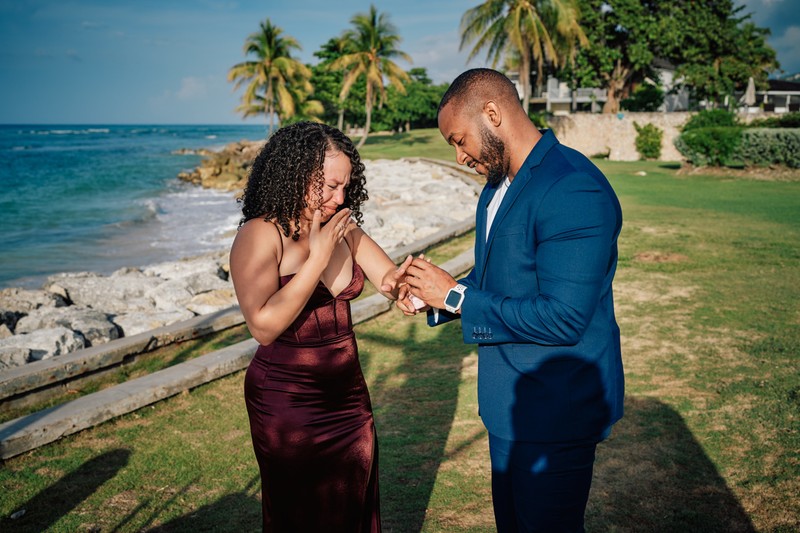
Approach two
The in-session proposal.
In this version, the partner being proposed to knows there is a photographer. The couple has booked what appears to be a regular couples shoot. The session begins as planned, both people are present, and everything feels entirely normal. What the partner does not know is that at a specific moment, in a location chosen deliberately in advance, the proposal is going to happen.
There is no need to hide. The challenge here is different entirely.
The preparation
When the session is the cover story.
The planning conversation for this version focuses less on concealment and more on sequencing. Where in the session the proposal should happen. Which spot, and why that spot works photographically. How to move toward it without signalling the shift. These are the things we work out in advance so that on the day it feels like it simply happened, rather than like something that was engineered.
My job in the lead-up to the moment is to keep the session relaxed and the energy easy. The partner needs to be comfortable and unsuspecting. I am reading the mood continuously, watching for the right conditions, and helping create the kind of ease that makes the moment feel entirely natural when it arrives.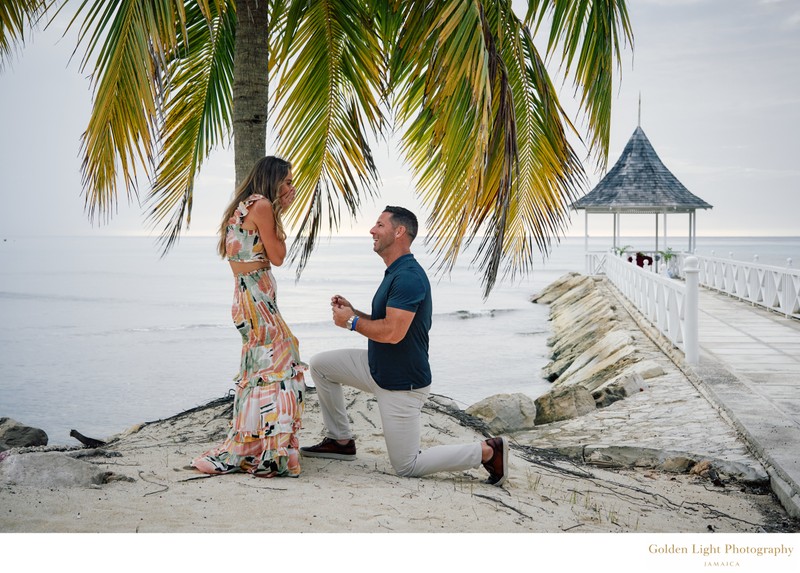
The photographs
A different quality of image.
Because the partner has already been in front of the camera for thirty or forty minutes by the time the proposal happens, they are not stiff or self-conscious when the moment arrives. The reaction, when it comes, happens in a face the camera already knows. That familiarity tends to produce a particular quality of image, one where the emotion sits very close to the surface because the guard was already down long before the ring appeared.
Neither approach is better than the other. They are different experiences that produce different photographs. The right one depends entirely on what you want the day to feel like.
Neither approach is better than the other. They produce different photographs. The right one depends entirely on what you want the day to feel like.
After the moment
What comes next.
However the proposal happens, what follows is the same. At some point I make myself known, or step away, depending entirely on what we discussed in advance. Some people want privacy immediately. Others want every subsequent minute documented.
When couples continue into a session after the moment, those portraits are consistently among the most joyful photographs I produce. The news has not yet been shared with anyone. The phone calls home have not started. It is just two people, newly engaged, in one of the most beautiful places on earth, with nothing else on the agenda. That combination produces something genuinely very difficult to manufacture at any other time.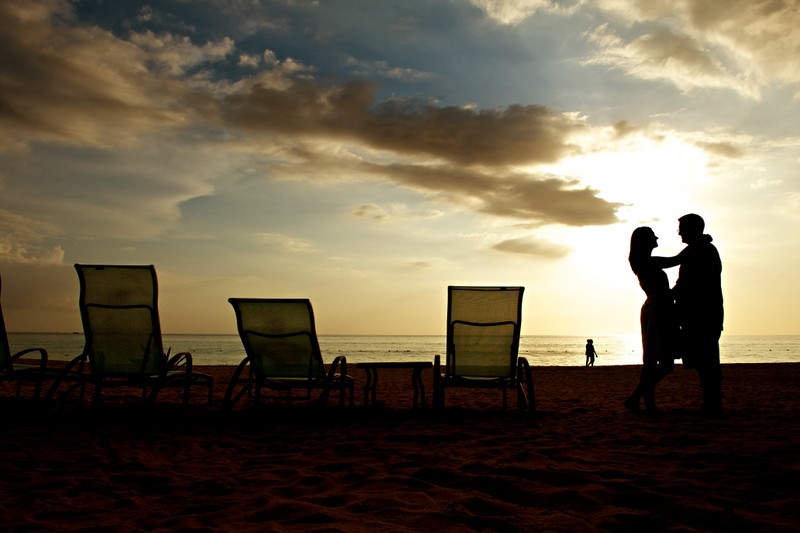
One practical note
Book early. Proposals need time to plan.
Whichever approach suits you, the coordination involved cannot be compressed into a few days. I recommend reaching out at least four to six weeks before your trip. More is always better. The details that make a proposal feel effortless on the day take time to work out properly in advance.
If you are planning a proposal in Jamaica and want to talk through which approach might suit you, the logistics, and what the day would look like, the best place to start is the engagement and proposal page, or get in touch directly.